
At present, it is not compulsory to wear a bicycle helmet in Poland, but this will change on 1 March 2026. On that date, a change in the law will come into effect, making it compulsory for children up to the age of 16 to wear a certified bicycle helmet. This applies to all public spaces (i.e. not only when cycling on the road, but also in parks, residential areas, etc.) and regardless of whether they are riding a bicycle, e-bike, electric scooter or other vehicle that falls under the category of personal transporters.
The law does provide for an exception to the helmet requirement for children who are transported in a bicycle seat or bicycle trailer that is equipped with factory-fitted seat belts and the design of which makes it impossible to wear a helmet. Adults are not required to wear a bicycle helmet, and there is no indication that this will change in the near future.
The fact that wearing a bicycle helmet is not compulsory for adults does not mean that it is a bad idea. A bicycle helmet does not prevent accidents, but it can make the difference between a stay in intensive care (or worse…) and a few bruises. Various studies have shown that a well-fitting helmet reduces the risk of serious head injury in a fall by 45 to 75% and death by 70%. Even at moderate speeds, a fall can cause head impact, so wearing a helmet adds an extra layer of safety, especially in traffic or on uneven terrain.
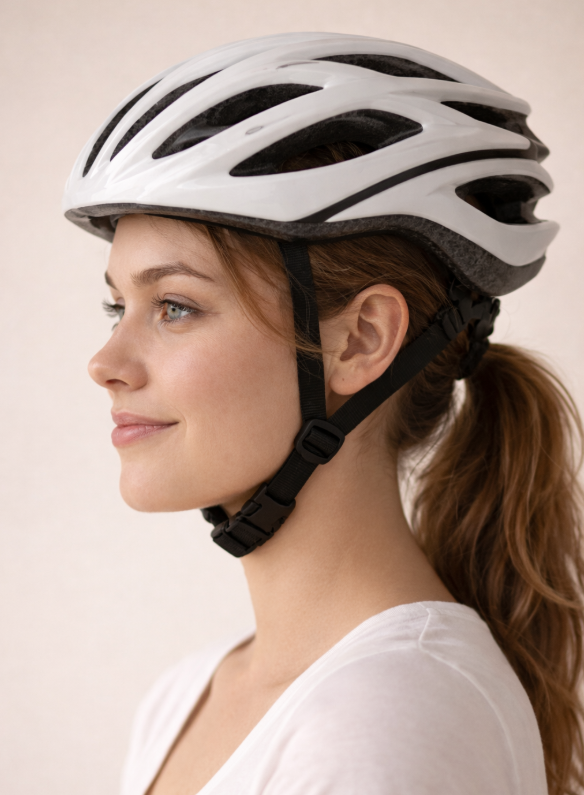
Choosing the right helmet
Your child’s bicycle helmet (and yours, if you decide to wear one too) must comply with European certification according to PN-EN 1078:1997 and PN-EN 1080:1997. This standard ensures that the helmet has been tested for shock absorption, strap strength, and field of vision. Resist the temptation to buy cheap imitations that look like a bicycle helmet but may not offer any protection.
A bicycle helmet, regardless of whether it meets standards and certifications, is only effective if worn correctly. The helmet should sit straight on the head, not tilted back, and should cover most of the forehead. The straps should form a tight ‘V’ under each ear and the buckle should be tight enough to keep the helmet in place when you shake your head. A loose or incorrectly positioned helmet does not provide adequate protection and can even cause discomfort or distraction, thereby creating additional danger.
Author’s comment
Observations at 13 different locations in the Netherlands in 2023 showed that only 5% of men and 3% of women wear a helmet when cycling (NDC Netherlands, 2023). I admit that I am among the 95% who do not wear a bicycle helmet. I do have one, and I have used it a few times, but at some point I decided to enjoy the fresh air around my head.
In the above text, I cite research results that show that wearing a bicycle helmet is or should be a matter of “common sense”. Nevertheless, as an adult in Poland, you can still decide for yourself whether or not to wear a helmet, and I believe this should remain the case. A bicycle helmet is not a panacea. Your safety depends to a large extent on other factors, above all your experience on the bicycle, where you ride and how you interact with other road users. I therefore do not feel like a hypocrite when I advise people to wear a helmet and write on the same page that I do not do so myself.
Whether you wear a helmet or not, the most important thing is to ride with awareness — follow traffic rules, stay visible, and respect other road users. A helmet is just one part of cycling safety, but it’s a simple step that can make a big difference.